Life On The Farm As The Years Fly Bye

We All Learn At a Different Pace

What did I learn about myself through my 4-H participation?

I learned that it is not easy to be 16 and on the edge of adulthood.

Head - to clear thinking, when giving your word to someone, think about how it will affect your heart if you buckle to peer pressure and go against your morals and ethics .

Heart - to greater loyalty; loyalty is something that is given freely and cannot be demanded or forced upon someone.

Hands - to larger service, you can only do what you feel is right and work hard to achieve your goals.

Health - to better living; if your word is your honor, and you stand fast to your morals and ethics; loyalty will come to you freely, your goals will be realized, and you will make a difference in the world around you.


I love 4-H !


Peer pressure is one of the hardest things we face; stay true to yourself no matter how hard it is and make a difference!

4H My Journey

Farmer's Hands Video

2011-2012 Western National Roundup

Showing posts with label history. Show all posts

Tuesday, December 18, 2012

2012 District III Livestock Skill-a-thon


 The District III Skill-a-thon contest was held  in Gooding County. 
Over 35 4-H members entered the contest from 5 different counties.
The age divisions included Clover Buds,
Junior 1, Junior 2, Intermediate, and Seniors.


The day started early with a work shop with different stations manned by Senior teens to assist those with learning the different skills needed to compete.


The skill-a-thon contest is a test of practical knowledge and covers 4 species, so Contestants have to know more than just the animal they show. Some of the categories include feed identification, breed identification, animal part identification, measuring ribeye and backfat, retail meat cut identification, feeds and feeding questions, judging hay samples and grain samples, and answering questions about how, where and why to give shots.


 This year the knowlege and fun was shared and had by all; before the contest begain we all had pizza and soft drinks.

This year placing are listed below.

Junior I
1st place tie Trey T. and Alexis N.
2nd Navada S.
3rd Josiah K.
4th John K.
5th Libby H.

Junior 2
1st place Kaycee T.
2nd Rose D.
3rd Thomas K.
4th Alicia E.
5th Jessica S.
6th Owen R.
7th Charlotte B.

Intermediate
1st place Wade T.
2nd Joesie D.
3rd MaKayla P.
4th Ellyana D.
5th Dustin A.
6th Lynnesy T.
7th Maria S.

Senior
1st place Cora I.
2nd Brianna R.
3rd Alexis C.
4th Braylee T.
5th Carlos C.
6th McKayla S.
7th Chris F


Clover Buds Wyatt and Gus


Junior I


Junior 2


Intermediates


Seniors


Thursday, December 29, 2011

Sunday, September 19, 2010

2010 District III Style Revue Contest

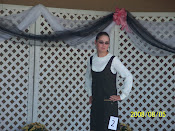
I had a great time at the District Style Revue this year; everyone did a great job. The Style Revue was held at the Wilson Theatre in Rupert Square, Rupert Idaho.
We were scored on; Posture and poise,well groomed appearance, Modeling of Outfit,Garment Presentation, Garment Construction,Pattern appropriate for Model, Fit of Garment, Choice of accessories, Color a Attractive on model, and effect of undergarments.

Thank You to All that work so hard to make the Style Revue A Great Contest and Give so Freely of their Time.


Here are a few pictures of the Contest.


Thursday, March 25, 2010

Livestock Judging, What is it?

For the next few weeks I will be looking for different sites of interest for all 4-H projects and posting their links. This is a new Blog be the first to follow.


Livestock Judging, What is it?
 Judging activities provide youth with an opportunity to develop communication, decision making and organizational skills, and enhance their confidence and self esteem.
Judging is usually a team effort, but individuals can also participate. Three to four youth on a team will judge various classes of livestock. Typically market and breeding beef, sheep, and swine species are used in a contest. Youth will judge each class (consisting of 4 animals) and an official judge will give his placing. Youth are then scored compared to the official judge. Oral reasons may or may not be included in a contest. If a contest does have a reasons class, youth will judge the class and take notes as to why they placed the class the way they did. Youth will then get an opportunity to work and rewrite their notes into reasons. Once they are finished, then youth will present their reasons to one person and they will receive a score to be added to their overall score. New this year is the Southern III District Livestock Judging Program. There are multiple scheduled days around the district this spring and summer. The goal of the Livestock Judging Program is to help youth and adults learn; 1. What to look for when judging animals 2. How to take notes 3. Understanding terms and animal parts 4. How to format and give oral reasons.


Cindy A. Kinder Extension Educator Gooding County Idaho


Wednesday, December 30, 2009

What A Fun Project


Today I went to what I thought was a one day camp. It is not a one day camp it is a project. My family drive's teams of horses and I thought I would go and learn about the equipment and tack and how to hook up the horse's. I had so much fun I signed up for the Project. I think everyone else had fun too.

It is not to late if you would like to learn how to drive a team of horses call the Gooding County Ext. office at 934 - 4417or the Lincoln County Ext. office at 886 -2406 for more information and the time and date of the next meeting.


  This Project was cool the ages of the different 4-H members was from 8 to 17

there were members from Gooding County, Jerome County and Lincoln County
So if you would like to have fun and learn to drive a team of horses.


The next meeting is on the 19th of January in Shoshone

Stay cool keep it natural and I will see you at the next meeting.


Sunday, May 3, 2009

A Short 4-H Club History

4-H grew out of the progressive educational movement of the late 1800’s and early 1900’s. Rural school Principals and Superintendents were interested in applying practical concepts to the reading, writing, and arithmetic they were trying to teach rural youth.

At the same time, agricultural colleges and experiment stations were accumulating a body of scientific knowledge that would improve the farmer’s productivity and living standards. These professors began to consider the possibilities of indirectly reaching the farmers through teaching the farmer’s children improved agricultural methods.

The idea of starting 4-H clubs cannot be credited to one individual or institution. Instead, 4- H has resulted from many pioneer leaders. However, three people seem to have played a significant role in promoting this 4-H movement: W.B. Otwell, of Illinois, was an early (1900) sponsor of special farm work for youth. A.B. Graham introduced modern
4-H club organization and methods in Ohio in 1902. And in 1905 O.H. Benson, County
superintendent of schools in Wright County, Iowa worked out a plan of tying farm problems and record keeping in with school work.

The practice of having volunteers lead 4-H clubs was established at the beginning and continues today. Community members trusted these leaders to be good models for their children. Farm women and men, trained by county Extension agents, acted as volunteer leaders in the early clubs. Usually leaders assumed a mentoring role, rather than serving as an authoritarian figure.

Throughout history, camping held and important role in 4-H. Initially it was seen as a means of rewarding and encouraging junior leaders. Documentation dated 1907 tells of a camp for boys held that year in Missouri. Thereafter, several states began holding camps, with West Virginia leading the way in formalizing camping as a part of 4-H. By the1921, West Virginia had established a permanent campsite that is still used.

During World War II, the 4-H program again focused on raising Victory Gardens. 4-H member also grew essential war crops, raised neat animals, and canned millions of jars of fruit, vegetables, and meats. The 4-H slogan was “ Food for Freedom.”

Thus, 4-H members helped relieve the labor shortage, served as neighborhood leaders, and assisted in war related activities. It was estimated from 1943 until the end of the war, 4-H clubs produced enough food to feed a million men serving the American forces. At the end of the war, 4-H enrollment once again saw a large increase, reaching a total of 2.5 million. The performance, achievements and contributions of 4-H’ers during the war is quite possibly the proudest moment among many such moments in the history and development of the 4-H program.